Fabric weight is the first number on a spec sheet and the last thing most people learn to read. A tee at 145 gsm and a tee at 260 gsm are not the same garment at different prices — they are different objects, built from different yarn on different machines, and they age in opposite directions. Here is the whole vocabulary: what the numbers mean, how the cloth is made, why it shrinks, and how to keep it alive.
What GSM actually measures
GSM stands for grams per square meter: cut a piece of fabric one meter square, weigh it, and that is the number. It says nothing directly about thickness, fiber quality or durability — a dense 240 gsm jersey and a lofty, loosely knit 240 gsm jersey weigh the same and behave nothing alike. But within a knit category it remains the most useful shorthand available.
American mills quote ounces instead, meaning ounces per square yard. The conversion is fixed: one ounce is 28.35 grams and one square yard is 0.8361 square meters, so 28.35 ÷ 0.8361 gives approximately 33.9 grams per square meter.
The conversion, both directions
Ounces to GSM, multiply by 33.9. GSM to ounces, divide by 33.9. A "6.5 oz tee" is 6.5 × 33.9 = 220 gsm; a 300 gsm fleece is 300 ÷ 33.9 = 8.8 oz. Watch the trap: an ounce figure occasionally describes a finished garment's total weight, which tells you nothing about the cloth. If a listing says "8 oz" for an entire hoodie, it is mislabeled.
One caveat: GSM is usually measured on finished, washed fabric, but not always. Greige cloth measures lighter than the same fabric after dyeing and compacting, so part of the gap between two brands' stated weights is simply where they took the reading.
Weight bands and what each one feels like
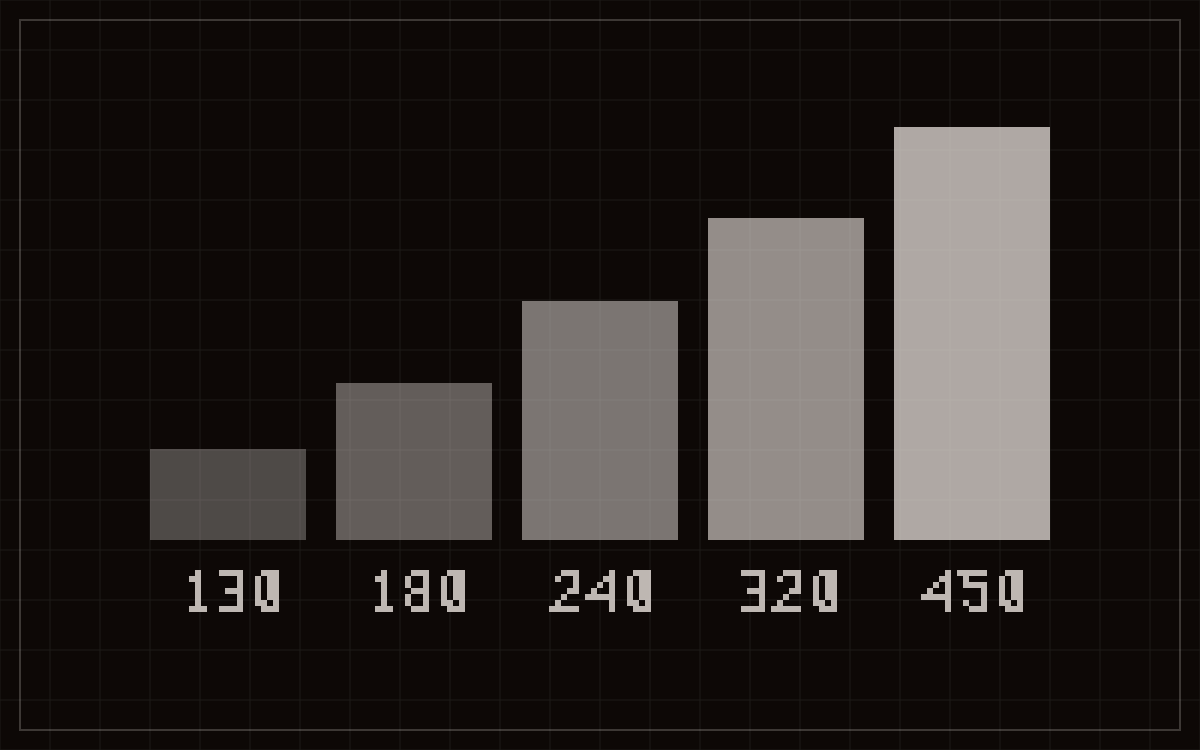
Four bands cover almost everything in a cotton knit wardrobe. The boundaries are convention rather than standard, but they map closely to how a garment behaves on the body.
| Band | GSM | oz/yd² | Typical garments | Hand and behavior |
|---|---|---|---|---|
| Lightweight | 130–160 | 3.8–4.7 | Summer tees, tanks | Drapes and clings, semi-sheer, collar stretches early |
| Midweight | 180–220 | 5.3–6.5 | Everyday tees, long-sleeves | Opaque, mild structure, follows the body without gripping |
| Heavyweight | 240–320 | 7.1–9.4 | Boxy tees, light hoodies | Stands away from the torso, holds a hem line, dries slowly |
| Ultra-heavy | 350–500 | 10.3–14.7 | Hoodies, crewnecks, fleece | Structural — the hood stands and the shoulder holds unworn |
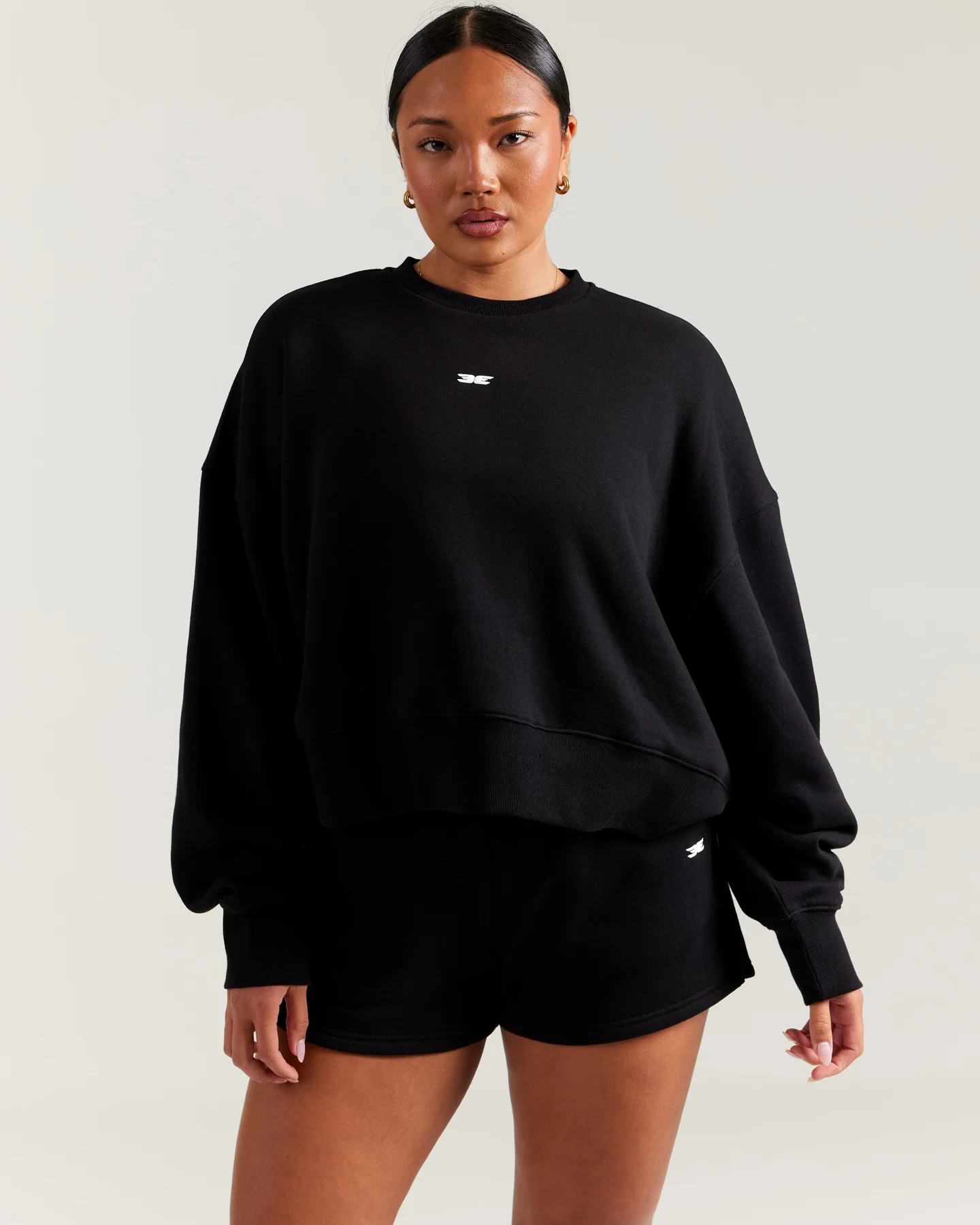
Heavier is not automatically better. A 320 gsm tee in a July heatwave is a mistake, and a 500 gsm hoodie will not close under most shells. Weight should follow the job: 180–220 against skin in warm months, 240–280 for a tee that should read as structure, 400–450 for a hoodie carrying a New York winter. Our size guide lists finished measurements alongside fabric weight for every cut.
Yarn: open-end, ring-spun, combed ring-spun
Two fabrics can share a GSM and a knit structure and still feel a decade apart, because the yarn came off different machines. Three grades matter.
Open-end (rotor) yarn
Fibers are fed into a spinning rotor and twisted without first being drawn into a continuous strand. It is fast and cheap, and the yarn is bulkier, hairier and weaker for a given thickness. Open-end tees pill sooner and go fuzzy at the friction points — underarms, strap lines, hem edges — within a season.
Ring-spun yarn
Fibers are continuously drawn, twisted and wound in one operation, producing a finer, stronger, smoother yarn with fewer protruding ends. It costs more and knits slower. The payoff is real softness rather than a chemical finish that washes out, plus far better pilling resistance.
Combed ring-spun
An extra step before spinning removes short fibers and impurities, discarding fifteen to twenty percent of the raw cotton. What remains is longer and more uniform — the standard for anything that should still look correct after fifty washes.
Behind all of it sits staple length — the length of the individual fiber. Standard upland cotton runs roughly 22–28 mm; extra-long staple varieties reach 35 mm and beyond. Pilling is mechanical: a short fiber has fewer anchor points inside the yarn, so abrasion works its ends free, they tangle, and a ball forms. Longer staple, tighter twist and combing all cut the supply of loose ends.
Weight tells you how much cotton is there. Yarn tells you how long it will stay that way.
Gifted Elite New York
Knit structures: jersey, interlock, terry, fleece
The knit determines how a fabric stretches, how it lies, and what it can become. Four structures cover the category.
| Structure | How it is built | Typical GSM | Face and back | Behavior |
|---|---|---|---|---|
| Single jersey | One needle bed | 120–280 | Flat V face, looped back | Stretches widthwise, curls at a raw edge, can twist |
| Interlock | Two interlocking beds | 180–250 | Identical both sides | Denser and more stable at equal weight, lies flat, no curl |
| French terry | Reverse loops left uncut | 240–380 | Smooth face, loop back | Breathable, dries fast, minimal shrink once compacted |
| Brushed fleece | Terry loops cut and napped | 280–500 | Smooth face, raised back | Warmest, traps air, sheds fiber early, flattens with age |
For hoodies and crewnecks the real choice is terry against fleece. Loopback terry keeps its face definition for years and breathes well enough for a subway platform. Brushed fleece feels better on day one and gives some of that back as the nap compresses.
Loopwheel, tubular and side-seamed
Loopwheel machines are vintage circular knitters that run extremely slowly, the fabric tube hanging under its own weight instead of being pulled through under tension. Output is roughly a meter an hour, against minutes on a modern knitter. Because the yarn is never stretched, the jersey comes off relaxed, dense for its weight, and resistant to the twisting and lengthwise growth tensioned fabric develops.
That fabric arrives as a seamless tube, which is why loopwheel and tubular construction travel together. A tubular tee has no side seams — the body is one cylinder, cut to length — so nothing at the side can twist. The limitation is that each tube is a fixed circumference, so sizing follows the machine rather than the pattern, and larger sizes run proportionally shorter.
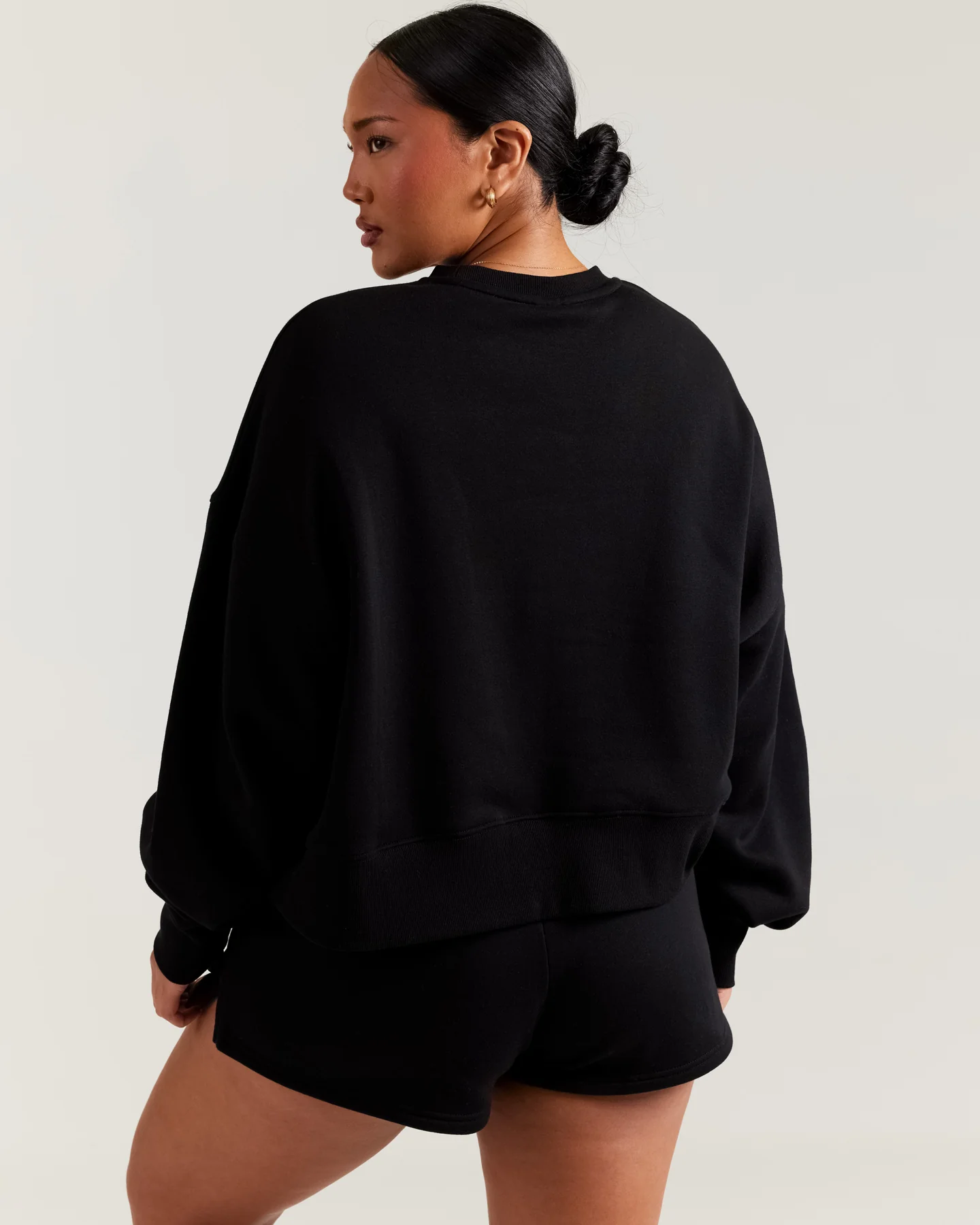
Side-seamed construction cuts the body from flat panels and sews them. It costs more in labor, but it lets a pattern maker shape the garment: taper the waist, square the shoulder, control the sleeve drop. For a boxy heavyweight silhouette, side seams make fit a decision rather than an accident of tube diameter — a relationship we cover in fit and proportion.
Dye methods, fade, and shrinkage
Piece dyeing colors the fabric before it is cut and sewn. It is the most common method, holds color consistently batch to batch, and fades evenly and slowly over years of washing.
Garment dyeing sews the piece first in undyed greige cloth, then dyes it finished. Dye penetrates unevenly around seams and stitching, which is the point: depth and a lived-in surface from day one. These pieces also shrink during dyeing, so they arrive close to final dimensions. Expect more variation unit to unit, and some crocking — color rub-off — early on.
Pigment dyeing does not bond to the fiber at all; pigment particles are fixed to the cotton surface with a binder. That is why pigment-dyed pieces fade fastest and most dramatically, going chalky at every abrasion point, and why they should never meet hot water unless that accelerated fade is exactly what you want.
Shrinkage is a separate mechanism. Knitting stretches yarn; washing lets it relax back. Untreated cotton jersey can lose five to ten percent of its length the first time it meets warm water. Sanforization — compressive shrinkage, where damp fabric is mechanically compacted before it is cut — pre-empts most of that; on knits it is usually called compacting, and done properly it holds residual shrinkage near three percent.
Pre-empting shrinkage
Assume one to three percent on compacted cotton and up to five on untreated or loopwheel fabric, mostly in length. On a 29 inch body, three percent is about seven-eighths of an inch — enough to move the hem. Wash cold once before judging fit, and size up if you are between sizes in an untreated heavyweight. See shipping and returns.
Care that actually extends garment life
Most damage to a cotton knit is mechanical and thermal, not chemical. Heat re-sets fibers, agitation abrades them, and tumble drying does both at once. Good care advice is mostly a variation on doing less.
- Wash less often. Heavyweight outer layers — hoodies, crewnecks, tees worn over something — go several wears. Airing overnight resolves more than a cycle does.
- Turn the garment inside out, putting the printed face and visible surface where the drum cannot abrade them.
- Wash cold, 30 °C or about 86 °F, on a gentle or short cycle. Modern detergents are formulated to work at low temperatures.
- Use half the detergent the bottle recommends, and skip fabric softener entirely. It leaves a waxy film that flattens terry, reduces absorbency and undermines print adhesion.
- Wash like with like. Zippers, denim rivets and hook fastenings are the main source of surface pilling on fleece.
- Air dry. Hang tees on a wide hanger; dry heavy fleece flat so wet weight cannot pull the shoulders out.
- Store knitwear folded. Gravity plus a narrow hanger produces permanent shoulder distortion in anything above 300 gsm.
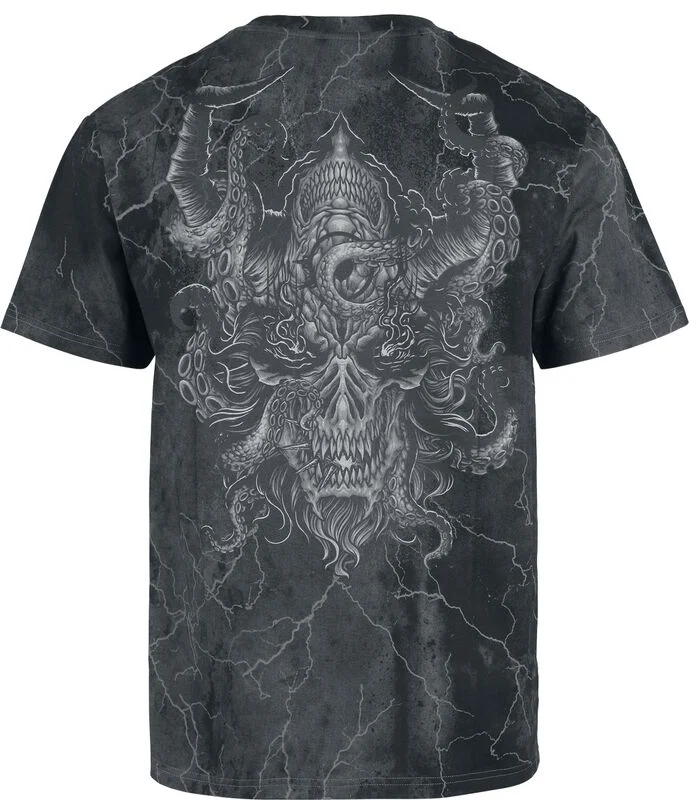
Printed graphics fail from heat and flex, in that order. Plastisol sits on the fabric as a film and cracks once hot drying makes it brittle; water-based and discharge inks sit in the fiber and lose density instead of splitting. Never iron directly on a print, and never tumble dry a printed heavyweight. Each ink type is covered in our guide to print techniques.
Reading a spec or care label
A spec line like "260 gsm, 100% combed ring-spun cotton, garment dyed, compacted, tubular" tells you the whole story: heavyweight band, good yarn, lived-in color, low residual shrink, no side seams. Work through it in this order.
- Fiber content first. Any polyester or elastane percentage changes shrinkage, pilling and heat tolerance completely.
- Weight and knit. GSM plus structure — jersey, interlock, terry or fleece — predicts drape and warmth better than either alone.
- Finish. Look for compacted, sanforized or garment dyed; their absence usually means untreated shrinkage.
- Symbols. The tub carries maximum wash temperature, one dot in a square means tumble low, a crossed square means no tumble at all, and a crossed circle means no dry cleaning.
Where a label and this guide disagree, follow the label. It was written for that specific dye and finish.
Key takeaways
- One ounce per square yard equals about 33.9 gsm: multiply ounces by 33.9, or divide GSM by 33.9.
- The bands are lightweight 130–160, midweight 180–220, heavyweight 240–320 and ultra-heavy 350–500 gsm. Match the band to the job, not to the highest number.
- Combed ring-spun yarn from longer staple cotton is the biggest single factor in how a knit resists pilling.
- Compacted or sanforized cotton holds residual shrinkage near three percent; untreated or loopwheel fabric can move five, mostly in length.
- Cold water, inside out, half the detergent, no softener, air dry, stored folded — worth more than any fabric upgrade.
Frequently asked questions
How do I convert GSM to ounces per square yard?
Divide the GSM figure by 33.9. One ounce per square yard equals 28.35 grams spread over 0.8361 square meters, which works out to approximately 33.9 gsm. So 220 gsm is about 6.5 oz, and 400 gsm is about 11.8 oz. Going the other way, multiply ounces by 33.9. Both figures describe the fabric, not the finished garment's total weight.
Is a heavier tee always better quality?
No. Weight only measures how much cotton occupies a square meter. A 280 gsm tee knit from open-end yarn will pill faster and feel rougher than a 200 gsm tee in combed ring-spun cotton. Yarn quality, knit structure and finishing determine how a garment ages; weight determines how it drapes and how warm it is. Read all four together.
How much will a heavyweight cotton hoodie shrink?
If the fabric has been compacted or sanforized, expect roughly one to three percent, mostly in length, and almost all of it in the first cold wash. Untreated or loopwheel fabric can move up to five percent. Garment-dyed pieces have already shrunk during dyeing, so they move least. Washing cold and air drying keeps you at the low end of every range.
Why do printed graphics crack, and can it be prevented?
Plastisol ink cures into a plastic film sitting on top of the fabric. Repeated high heat makes that film brittle, and flexing then splits it. Prevention is straightforward: wash cold, always turn the garment inside out, never tumble dry a printed heavyweight, and never place an iron directly on the print. Water-based inks sit inside the fiber and soften rather than crack.